Om Circular MuSe
Municipalities and municipal companies provide a variety of services such as snow clearing, street repairs and maintenance of public spaces. These activities are still heavily dependent on line management, using raw materials such as gravel and sand that are discarded after a single use. This practice leads to a high consumption of raw materials and the generation of waste. The Circular MuSe project is responding to this challenge by promoting the adoption of closed-loop economy principles to reuse raw materials and reduce waste in municipal services.
Objectives
The Circular MuSe project focuses on increasing resource efficiency in municipal services in smaller towns and rural areas in the South Baltic region by:
- Reducing the consumption of raw materials by reusing materials within municipal services.
- Minimizing waste by promoting innovative reuse strategies in various municipal operations.
- Establishing a ‘South Baltic Knowledge Hub’ to enable knowledge transfer and capacity building in closed-loop municipal services.
Approach
- Establish a South Baltic Knowledge Hub on Circular Municipal Services to facilitate cross-border knowledge exchange.
- Share best practices, case studies, and modular curricula tailored to municipal utility companies and decision-makers.
- Test new circular economy approaches through feasibility studies and field tests.
- Focus on reuse strategies in smaller cities and rural areas across municipal services.
- Offer training and mentoring programs for municipalities to help them implement circular economy approaches.
- Encourage cross-border collaboration and knowledge sharing.
Project outputs
- Creation of a South Baltic Knowledge Hub on Circular Municipal Services.
- Feasibility studies and pilot actions testing circular approaches in municipal services.
- Educational programs, workshops, and mentoring sessions for municipalities.
- Cross-border cooperation and exchange of best practices.

Target groups
- Municipal utility companies
- Local and regional governments
- Environmental organizations
- Decision-makers in smaller cities and rural areas
- Researchers and educational institutions
General information
- Total expenditure: 1,419,656.00 EUR
- EU contribution: 1,135,724.80 EUR
- Project duration: 36 months
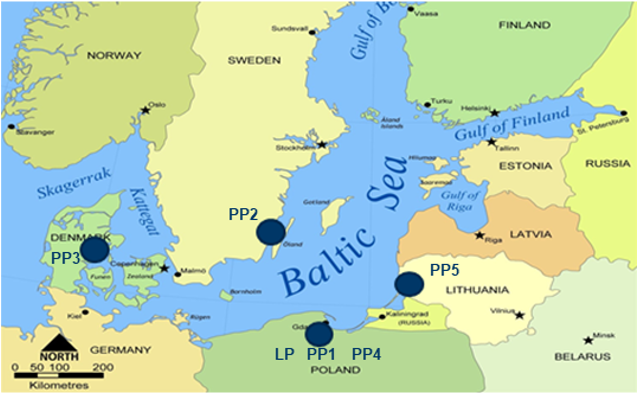
Partnering institutions
- Gdansk University of Technology (Poland)
- Ekofabryka Wejherowo (Poland)
- Kalmar Municipality (Sweden)
- Via University College (Denmark)
- Association of Polish Communes Euroregion Baltic (Poland)
- Klaipeda University (Lithuania)
Enroll now!
Simply fill out the form provided on our home page with a few details.
We will create your user access and notify you using the e-mail you provided.
Enrollment is completely free of charge.
